Instrument Cluster
Wschód, Warsaw
12.07 - 13.09.2025
Instrument Cluster delves into the enveloped relationship between environmental networks, industrial infrastructure, and machinic perception. Through the exhibition’s title, Adam Shiu-Yang Shaw introduces the vehicle’s dashboard – its driver-facing control panel – as an allegorical interface for Earth’s ecological warnings. By invoking this metaphor, the exhibition invites viewers to consider our role not merely as passengers but as operators within extractive systems – systems we monitor, navigate, and are ultimately responsible for steering.
Shaw’s project centers on the Athabasca Oil Sands, located in the remote northern hinterlands of Alberta, Canada. His focus narrows to Mildred Lake, an open-pit oil sands mine and bitumen upgrading site overseen by Syncrude, one of the region’s major crude oil producers. Due to restricted ground-level access, mining and processing activities are primarily observable through satellite and aerial imaging. From these elevated vantage points, mining facilities appear as dense constellations of machinery – a territorial instrument cluster in its own right.
The exhibition responds to this sense of visual and procedural entanglement through a series of fragmentary maquettes. Employing a combinatorial approach to model-making, these works integrate elements of industrial architecture, vehicles, and the auxiliary frameworks around bitumen mining, into patchwork assemblages. Constructed from repurposed detritus – newsprint, lumber, insulation foam – alongside ubiquitous building materials, Shaw’s works merge handcrafted and machine-driven techniques. This hybrid method mirrors the layered materiality of mining operations, offering a speculative lens through which to imagine how dominant modes of energy harvesting might be perceived from a distant future.
Expanding upon Shaw’s earlier investigations of refineries, shipping canals, and mill sites, Instrument Cluster reflects on extractive infrastructure as both a cultural emblem and a future ruin. The project explores the entwinement of regional identity, economic dependency, and shifting societal aspirations as they relate to energy production. Which of these elements will persist, and how they will be remembered – or misremembered – remains an open question. In framing this ambiguity, Shaw’s work calls attention not only to material legacies, but to the stories we construct around them.


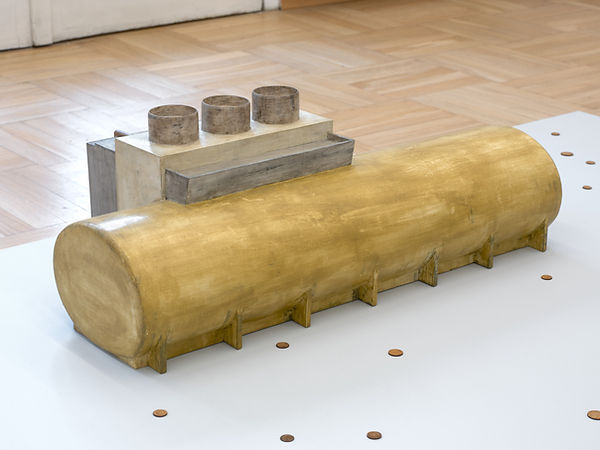


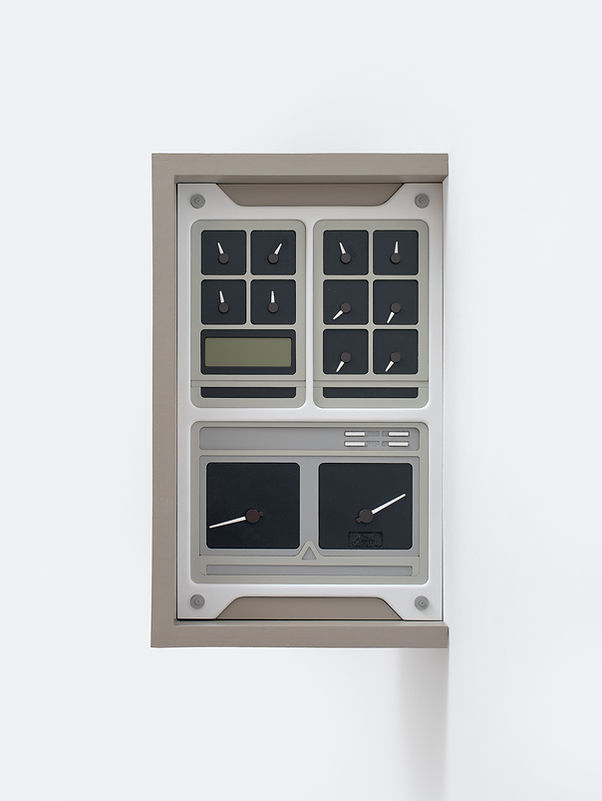


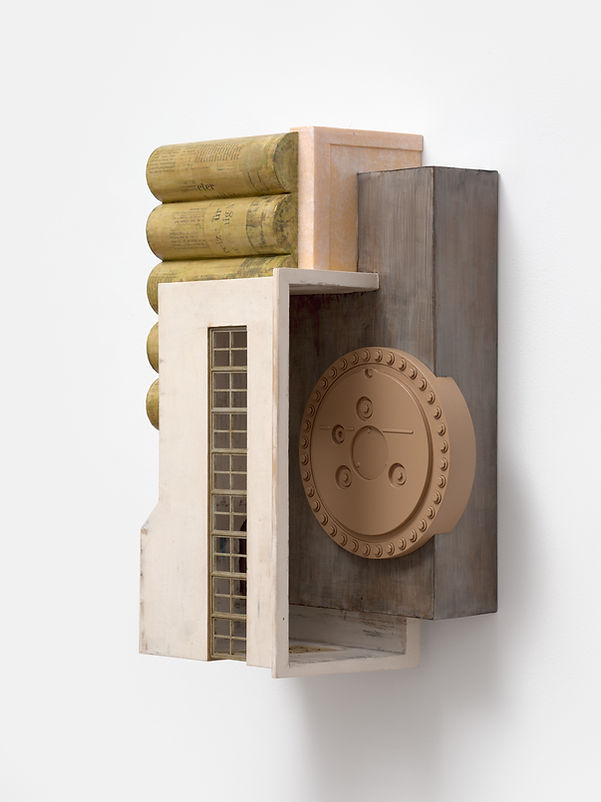


Photo credit: Bartosz Zalewski
With support from Canada Council for the Arts