Still
Group show with Ceal Floyer, Ron Terada, and Ian Wallace
Catriona Jeffries, Vancouver
06.09 - 18.10.2025
A desk is lit with the cast of morning’s earliest light, pens and papers spread across the table, the surface barely visible. Visual references are placed just beside, physiques ready for rendering. With the genre of still life dating back at least to the 16th century, the romantic image of an artist diligently capturing classical forms is a well-known archetype within western art history. What is most provocative about this practice here and now is the act of holding still; in our contemporary post-internet temporalities, what is the significance of capturing subjects in an exact moment in time? In this moment where the so-called authenticity of both artworks and objects are increasingly at risk of degradation by way of virtual proliferation and machine learning extrapolation, where then exists the sacredness of stillness?
These new virtual technologies and their effects have not been without precedent. The transforming economies throughout the late 19th and 20th centuries led artists and critics to trade symbolically loaded subjects traditionally reserved for the still life vignette for mass-produced everyday objects. Giorgio Morandi painted the factory-cast bottle, while Walter Benjamin anticipated the impact of mechanical reproduction on an increasingly image-based society. The proliferation of both manufactured objects and images, and how they became imbued with the ritualistic signifiers of the artist’s hand, is the critical question in understanding our relationship to linear time and its influence on contemporary ways of living.
In new paintings, Ron Terada presents contrasting combinations of ingredients against a painted gradient. “French Onion Orecchiette,” “Roasted Carrots With Whipped Tahini,” and “No-Knead Bread” emphasize the formal serif font of The New York Times with recipe titles taken from the eponymous journal’s cooking website and app, NYT Cooking. Such narrative depictions of select ingredients, chosen for their provocative, click-bait potency, describe a tabletop of contemporary food culture. Global culinary fusion meets the literary device, hinting at a distilled, aspirational North American class consciousness, in which dinner is determined by a curated scroll.
Through photographic captures, Ian Wallace depicts the hotel desk as a nomadic artist’s studio. Against a painted colour field, the scenes feature tabletops as propositions for artistic and intellectual pursuits. Writings by Mallarmé pose in a table’s corner, while the ancient cobblestones of Costa Brava reveal themselves through curtained windows in another. Such complementary vistas are loaded in their aesthetic tensions, proposing classical still life themes by way of photoconceptualism, highlighting how the ever-fleeting present weighs on our understanding of memory and conceptions of a place in a particular time.
The centre of the gallery is similarly punctuated, not by a weighty sculpture as one might expect, but by a delicate plumbline hanging from the ceiling. Traditionally, plumblines are used to determine a straight line when building vertical structures. Installed here in the centre of the two gallery spaces, Ceal Floyer emphasizes the liminal constructions of open space, engaging the viewer to note the still life present through their observation of the exhibition. Elsewhere, a small shelf hosts thirty-two objects chosen specifically for their shape, perfectly filling the various-sized holes of an architectural circle stencil. There is a playful conceit to Helix (2016)—a still life which gathers personal objects brought together, not for their aesthetic or thematic properties, but for their globally-standardized circumferences.
The darkened second gallery includes Floyer’s Light Switch (Switzerland) (1992), which is cast on the wall by the help of a projector. This simulacrum recalls the unadorned strategies of Morandi’s still lifes. By insisting on the smallest gesture to conjure up the most unassuming object in a room, Floyer reignites the everyday banal, spiriting a desire for new ways of looking at the most familiar of scenes, wherein an absence reinserts a presence.
Backlit by golden lights, two sculptures by Adam Shiu-Yang Shaw house a selection of silver pears and a sheaf of wheat. The works reference neoclassical architecture in miniature, their forms holding the harvests like a shrine. This reductive classicism also appears in the frame of father’s son (2018), wherein a man composed of simple shapes holds a small bottle on his lap. The image is echoed again in a second wall work, this time cast and pigmented with iron powder. Utilizing both constructivist imagery and a social realist sensibility towards the materials and their styling, the works project an anthropomorphized relationship, complicating what, if any, humanistic traits remain within objecthood. In the cast vignette, this tender gesture is permanently rendered, monumentalizing the emotion within a passing second.
If the act of holding still disrupts linear time—providing momentary respite to the ongoing expenditure of objects and organic bodies—then the resulting tableau scrutinizes the meaning within overlooked liminal spaces. The depreciation of material objects in our contemporary landscape, which increasingly values virtual encounters with the real-world, often overrides the meaning of objecthood. In this way, Morandi’s still lifes were perhaps an early symptom of the post-internet, post-capitalist world that we currently inhabit, a world in which dinner is inspired from the iPad, travel accommodations are booked through a metasearch engine, outmoded technologies are cast as affective markers, and inanimate figures project human emotion. Amidst the effects of digital immediacy on our everyday combined with conflicts and growing economic inequities around the globe, it is perhaps the most unassuming parts of our lives which contain the most meaning.


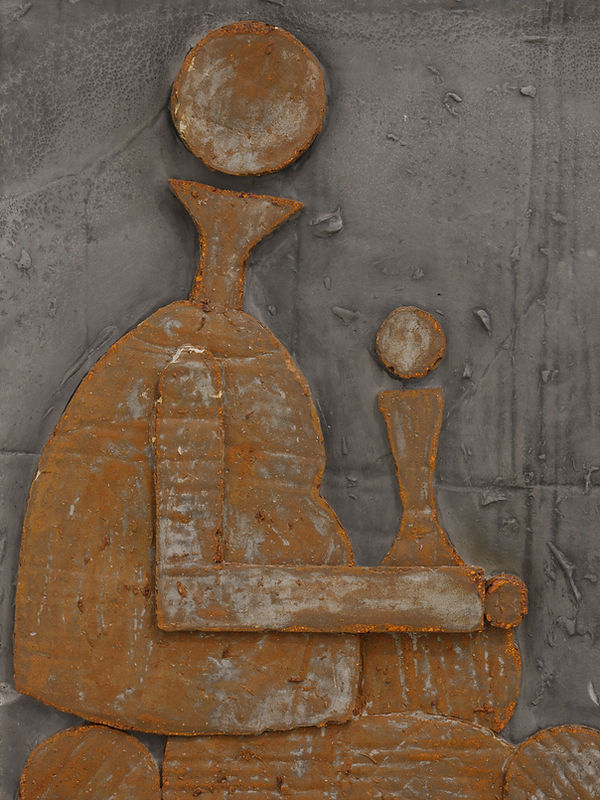
Photo credit: Rachel Topham